

Hey there! I'm a supplier of centrifugal transfer pumps, and today I wanna talk about something super important in the pump world: the effect of viscosity on the Net Positive Suction Head (NPSH) of a centrifugal transfer pump.
First off, let's quickly go over what NPSH is. NPSH is basically the difference between the suction pressure at the pump inlet and the vapor pressure of the liquid being pumped. It's a crucial factor because if the NPSH available at the pump inlet is less than the NPSH required by the pump, the liquid can start to vaporize, causing cavitation. Cavitation is a real pain in the neck—it can damage the pump impeller, reduce pump efficiency, and even lead to complete pump failure.
Now, let's dig into viscosity. Viscosity is a measure of a fluid's resistance to flow. Think of it like this: honey has a high viscosity, so it flows slowly, while water has a low viscosity and flows easily. When it comes to centrifugal transfer pumps, the viscosity of the liquid being pumped can have a big impact on the NPSH.
When you're dealing with a low - viscosity fluid like water, the pump operates pretty much as expected. The fluid can easily enter the pump inlet, and the NPSH requirements are relatively straightforward. But as the viscosity of the fluid increases, things start to get a bit more complicated.
One of the main effects of high - viscosity fluids on NPSH is the increased frictional losses in the suction piping. High - viscosity fluids don't flow as smoothly as low - viscosity ones, so they experience more friction as they move through the pipes. This friction causes a pressure drop in the suction line, which reduces the NPSH available at the pump inlet.
Let me give you an example. Say you've got a centrifugal transfer pump that's designed to pump water. The NPSH required for this pump to operate without cavitation is well - defined for water. But if you start pumping a high - viscosity oil instead, the frictional losses in the suction line will be much higher. As a result, the NPSH available at the pump inlet will decrease, and you might start to experience cavitation even if the pump was working fine with water.
Another aspect is the way high - viscosity fluids interact with the pump impeller. The impeller of a centrifugal pump is designed to impart energy to the fluid and increase its pressure. With a low - viscosity fluid, the impeller can do this efficiently. But when the fluid is highly viscous, it's more difficult for the impeller to transfer energy to the fluid. This can lead to a reduction in the pump's head and flow rate, and it can also increase the NPSH required by the pump.
So, what can you do if you need to pump a high - viscosity fluid? Well, first of all, you might need to increase the NPSH available at the pump inlet. This could involve raising the level of the fluid in the suction tank to increase the static head, or reducing the length and diameter of the suction piping to minimize frictional losses.
You also need to choose the right pump for the job. At our company, we offer a range of centrifugal transfer pumps that are suitable for different viscosities. For example, our Cast Iron Centrifugal Pumps are a great option for many applications. They're durable and can handle a variety of fluids, but you need to make sure to consider the viscosity when sizing the pump.
If you're dealing with extremely high - viscosity fluids or need a pump with a high head, our Multistage Centrifugal Pumps might be the way to go. These pumps can generate higher pressures and are better equipped to handle the challenges of pumping high - viscosity fluids.
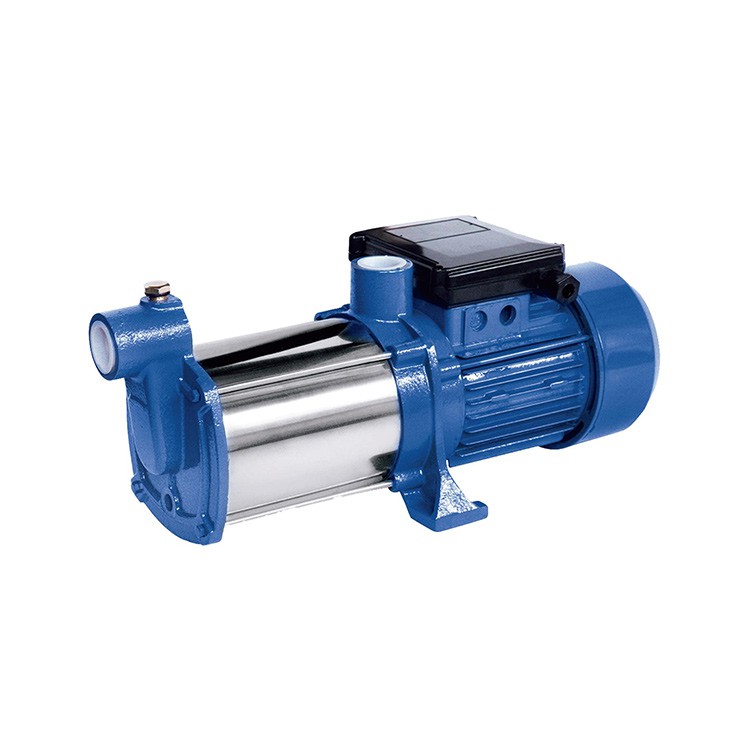

And for those of you looking for a centrifugal pump for home use, our Centrifugal Pump for Home is a reliable choice. Whether you're pumping water from a well or for other domestic applications, it's important to understand how viscosity can affect the pump's performance.
When you're selecting a pump for a high - viscosity application, it's also a good idea to consult with an expert. We have a team of experienced engineers who can help you determine the right pump size, the NPSH requirements, and the best way to set up your pumping system.
In addition to the frictional losses and impeller interaction, the temperature of the fluid can also play a role when dealing with viscosity and NPSH. Generally, as the temperature of a fluid increases, its viscosity decreases. So, if you're pumping a high - viscosity fluid, heating it up a bit can sometimes help reduce the frictional losses and improve the pump's performance. However, you need to be careful not to heat the fluid too much, as this can increase the vapor pressure and reduce the NPSH available.
It's also worth noting that the design of the pump itself can be adjusted to better handle high - viscosity fluids. Some pumps have larger impeller passages and more open volutes to allow the high - viscosity fluid to flow more easily. These design features can help reduce the frictional losses and improve the NPSH performance.
To sum it up, the viscosity of the fluid being pumped has a significant impact on the NPSH of a centrifugal transfer pump. High - viscosity fluids can increase frictional losses in the suction line, reduce the NPSH available at the pump inlet, and change the way the impeller interacts with the fluid. But with the right pump selection, proper system design, and a good understanding of the fluid properties, you can ensure that your centrifugal transfer pump operates efficiently and without cavitation.
If you're in the market for a centrifugal transfer pump, whether it's for industrial, commercial, or home use, we're here to help. We've got a wide range of pumps to suit different viscosities and applications. Don't hesitate to reach out to us to discuss your specific needs and get the best solution for your pumping requirements.
References
- Karassik, I. J., Messina, J. P., Cooper, P. T., & Heald, C. C. (2008). Pump Handbook. McGraw - Hill.
- Stepanoff, A. J. (1957). Centrifugal and Axial Flow Pumps: Theory, Design, and Application. John Wiley & Sons.