

When it comes to fluid transfer in various industries and applications, pumps play a crucial role. Two commonly used types of pumps are the Centrifugal Pump Mini and the rotary lobe pump. As a supplier of Centrifugal Pump Mini, I often get asked about the differences between these two types of pumps. In this blog post, I'll delve into the details of each pump, highlighting their unique features, advantages, and disadvantages, to help you make an informed decision when choosing the right pump for your needs.
Centrifugal Pump Mini
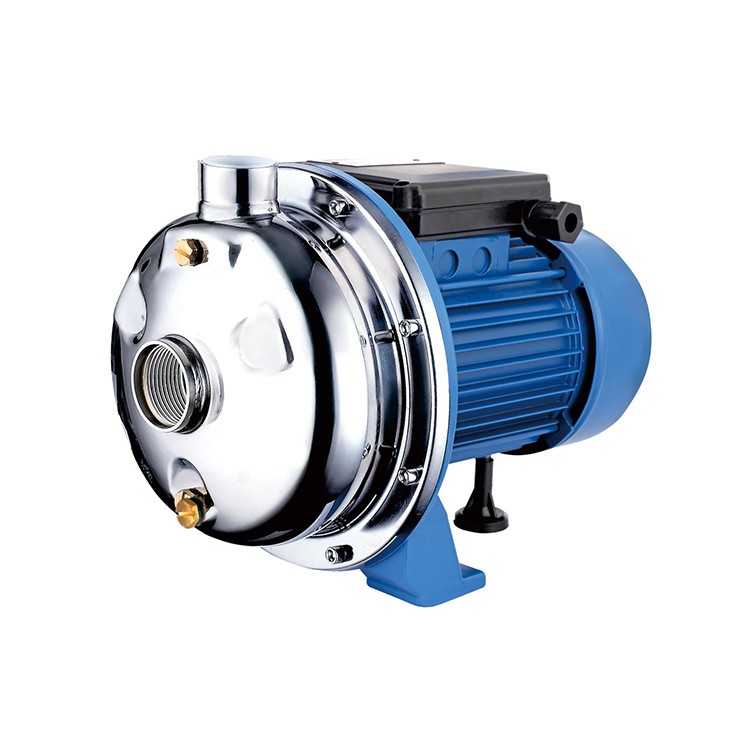
A Centrifugal Pump Mini is a type of dynamic pump that uses centrifugal force to transfer fluids. It consists of an impeller, a casing, and an inlet and outlet. The impeller rotates at high speed, creating a centrifugal force that pushes the fluid from the center of the impeller to the outer edges. The fluid then enters the casing, where it is collected and discharged through the outlet.
Features
- Compact Size: As the name suggests, the Centrifugal Pump Mini is designed to be small and lightweight, making it ideal for applications where space is limited.
- High Flow Rate: Despite its small size, the Centrifugal Pump Mini can achieve relatively high flow rates, making it suitable for applications that require the transfer of large volumes of fluid.
- Low Pressure: Centrifugal pumps are generally designed to operate at low pressures, making them suitable for applications where the fluid needs to be transferred over short distances or at low elevations.
- Simple Design: The Centrifugal Pump Mini has a simple design, with few moving parts, which makes it easy to install, operate, and maintain.
Advantages
- Cost-Effective: Centrifugal pumps are generally less expensive than other types of pumps, making them a cost-effective option for many applications.
- Easy to Install: The simple design of the Centrifugal Pump Mini makes it easy to install, even in tight spaces.
- Low Maintenance: With few moving parts, the Centrifugal Pump Mini requires minimal maintenance, reducing downtime and operating costs.
- Versatile: Centrifugal pumps can be used to transfer a wide range of fluids, including water, chemicals, and slurries.
Disadvantages
- Limited Viscosity Handling: Centrifugal pumps are not suitable for transferring highly viscous fluids, as the high viscosity can reduce the pump's efficiency and performance.
- Low Suction Lift: Centrifugal pumps have a limited suction lift, which means they may not be able to draw fluid from deep wells or tanks.
- Prone to Cavitation: Cavitation can occur when the pressure at the inlet of the pump drops below the vapor pressure of the fluid, causing the formation of vapor bubbles. This can damage the pump and reduce its efficiency.
Rotary Lobe Pump
A rotary lobe pump is a type of positive displacement pump that uses two or more lobes to transfer fluids. The lobes rotate within a housing, creating chambers that trap and move the fluid from the inlet to the outlet. The lobes are typically made of rubber or other elastomeric materials, which provide a tight seal and prevent the fluid from leaking back.
Features
- High Viscosity Handling: Rotary lobe pumps are designed to handle highly viscous fluids, making them suitable for applications that require the transfer of thick liquids, such as oils, syrups, and pastes.
- Low Shear: Rotary lobe pumps operate at low speeds, which minimizes the shear forces applied to the fluid. This makes them suitable for applications where the fluid needs to be handled gently, such as in the food and beverage industry.
- Self-Priming: Rotary lobe pumps are self-priming, which means they can draw fluid from a lower level without the need for external priming.
- Reversible Flow: Rotary lobe pumps can be operated in either direction, allowing for bidirectional flow.
Advantages
- Efficient Transfer of Viscous Fluids: Rotary lobe pumps are highly efficient at transferring viscous fluids, even at low speeds.
- Gentle Handling of Fluids: The low shear design of the rotary lobe pump makes it suitable for handling delicate fluids, such as emulsions and suspensions.
- Self-Priming Capability: The self-priming feature of the rotary lobe pump eliminates the need for external priming, making it easy to install and operate.
- Reversible Flow: The ability to operate the pump in either direction provides flexibility in fluid transfer applications.
Disadvantages
- Higher Cost: Rotary lobe pumps are generally more expensive than centrifugal pumps, due to their more complex design and higher manufacturing costs.
- Larger Size: Rotary lobe pumps are typically larger and heavier than centrifugal pumps, which may limit their use in applications where space is limited.
- Higher Maintenance: Rotary lobe pumps have more moving parts than centrifugal pumps, which requires more frequent maintenance and servicing.
Comparison of Centrifugal Pump Mini and Rotary Lobe Pump
Now that we've explored the features, advantages, and disadvantages of both the Centrifugal Pump Mini and the rotary lobe pump, let's compare them side by side to see how they stack up against each other.
Flow Rate
Centrifugal Pump Mini: Can achieve relatively high flow rates, making it suitable for applications that require the transfer of large volumes of fluid.
Rotary Lobe Pump: Generally has a lower flow rate compared to centrifugal pumps, but is more efficient at transferring viscous fluids.

Pressure
Centrifugal Pump Mini: Designed to operate at low pressures, making it suitable for applications where the fluid needs to be transferred over short distances or at low elevations.
Rotary Lobe Pump: Can generate higher pressures compared to centrifugal pumps, making it suitable for applications that require the fluid to be transferred over longer distances or at higher elevations.
Viscosity Handling
Centrifugal Pump Mini: Not suitable for transferring highly viscous fluids, as the high viscosity can reduce the pump's efficiency and performance.
Rotary Lobe Pump: Designed to handle highly viscous fluids, making it suitable for applications that require the transfer of thick liquids, such as oils, syrups, and pastes.
Shear Forces
Centrifugal Pump Mini: Can generate high shear forces, which may damage delicate fluids or particles in the fluid.
Rotary Lobe Pump: Operates at low speeds, which minimizes the shear forces applied to the fluid, making it suitable for applications where the fluid needs to be handled gently.
Self-Priming
Centrifugal Pump Mini: Generally not self-priming, which means it may require external priming to draw fluid from a lower level.
Rotary Lobe Pump: Self-priming, which means it can draw fluid from a lower level without the need for external priming.
Cost
Centrifugal Pump Mini: Generally less expensive than rotary lobe pumps, making it a cost-effective option for many applications.
Rotary Lobe Pump: Generally more expensive than centrifugal pumps, due to their more complex design and higher manufacturing costs.
Which Pump is Right for You?
The choice between a Centrifugal Pump Mini and a rotary lobe pump depends on several factors, including the type of fluid being transferred, the flow rate and pressure requirements, the viscosity of the fluid, and the budget. Here are some general guidelines to help you make the right decision:
- If you need to transfer large volumes of low-viscosity fluid over short distances or at low elevations, a Centrifugal Pump Mini may be the best choice. It is cost-effective, easy to install and maintain, and can achieve relatively high flow rates.
- If you need to transfer highly viscous fluids or fluids that require gentle handling, a rotary lobe pump may be the better option. It is more efficient at transferring viscous fluids, operates at low shear forces, and is self-priming.
- If you need a pump for home use, such as for watering the garden or filling a pool, a Centrifugal Pump for Home may be suitable. It is compact, easy to use, and can handle low to medium flow rates.
- If you need a pump for transferring fluids from a tank, a Centrifugal Tank Pump may be the right choice. It is designed to handle the specific requirements of tank transfer applications, such as high flow rates and low pressures.
Conclusion
In conclusion, both the Centrifugal Pump Mini and the rotary lobe pump have their own unique features, advantages, and disadvantages. The choice between the two depends on the specific requirements of your application. As a supplier of Centrifugal Pump Mini, I can provide you with the expertise and guidance you need to choose the right pump for your needs. If you have any questions or would like to discuss your pumping requirements, please feel free to contact me for a consultation. I look forward to helping you find the perfect pump solution for your application.
References
- Chemical Engineering Handbook. McGraw-Hill Education.
- Pump Handbook. Karassik, I. J., Messina, J. P., Cooper, P. W., & Heald, C. C. (Eds.). (2008). McGraw-Hill Professional.
- Principles of Chemical Engineering Processes. Bhatt, B. L., & Vora, V. V. (2009). Tata McGraw-Hill.