

A centrifugal tank pump is a crucial piece of equipment in various industrial and commercial applications, designed to transfer liquids from one location to another. The typical flow rate of a centrifugal tank pump is a key parameter that determines its suitability for different tasks. As a leading supplier of centrifugal tank pumps, we understand the importance of this metric and are committed to providing our customers with the most accurate and detailed information.
Understanding Flow Rate
Flow rate, often measured in gallons per minute (GPM) or liters per minute (LPM), refers to the volume of liquid that a pump can move through a system in a given period. In the context of centrifugal tank pumps, the flow rate is influenced by several factors, including the pump's design, impeller size, motor power, and the characteristics of the liquid being pumped.
Factors Affecting Flow Rate
Pump Design
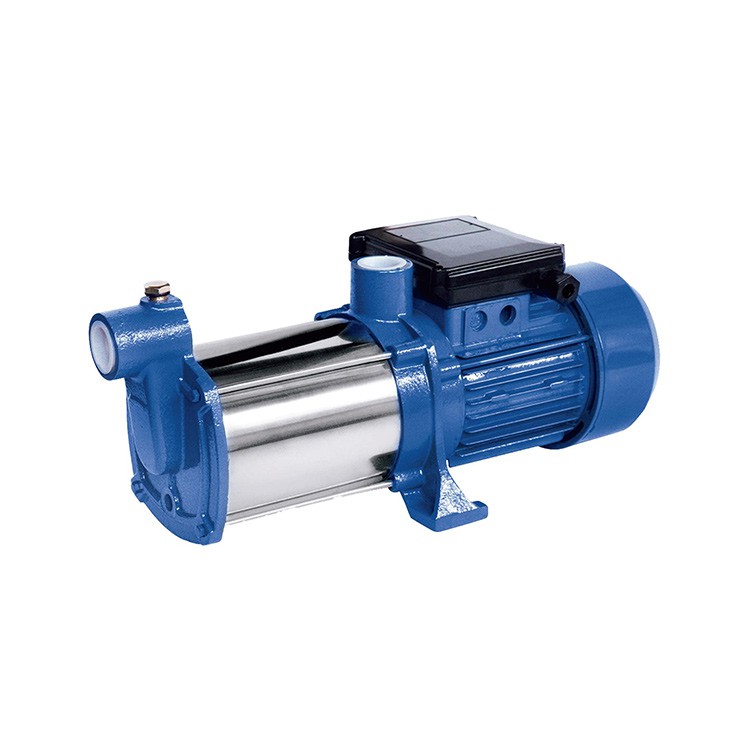
The design of a centrifugal tank pump plays a significant role in determining its flow rate. Pumps with larger impellers and wider volutes generally have higher flow rates. Multistage centrifugal pumps are designed to increase the head pressure by using multiple impellers in series. These pumps can achieve higher flow rates in applications where greater pressure is required. You can learn more about Multistage Centrifugal Pumps on our website.
Impeller Size
The impeller is the rotating component of a centrifugal pump that imparts energy to the liquid. A larger impeller diameter can move more liquid and therefore result in a higher flow rate. However, increasing the impeller size also requires more power from the motor, which can impact the pump's efficiency and operating costs.
Motor Power
The motor power of a centrifugal tank pump is directly related to its ability to drive the impeller and move the liquid. A more powerful motor can spin the impeller at a higher speed, increasing the flow rate. However, it is important to select a motor that is properly sized for the pump to ensure optimal performance and energy efficiency.
Liquid Characteristics
The viscosity, density, and temperature of the liquid being pumped can also affect the flow rate of a centrifugal tank pump. Viscous liquids require more energy to move, which can reduce the flow rate. Similarly, liquids with higher densities may require a more powerful pump to achieve the desired flow rate. In some cases, pumps specifically designed for hot water may be necessary to handle the thermal expansion and other challenges associated with high - temperature liquids. Check out our Centrifugal Pump for Hot Water for such applications.
Typical Flow Rates
The typical flow rate of a centrifugal tank pump can vary widely depending on the application. For small - scale residential or light - commercial applications, such as water transfer in a household or a small garden irrigation system, pumps with flow rates ranging from 5 to 20 GPM (19 to 76 LPM) may be sufficient.
In industrial settings, such as chemical processing plants, water treatment facilities, or large - scale agricultural operations, the flow rates can be much higher. High - volume centrifugal pumps are often used in these applications, with flow rates ranging from 100 to several thousand GPM (379 to over 11,356 LPM). To explore our range of High Volume Centrifugal Pump, visit our website.
Selecting the Right Pump Based on Flow Rate
When selecting a centrifugal tank pump, it is essential to accurately determine the required flow rate for your application. This involves considering the volume of liquid that needs to be transferred, the distance it needs to be moved, and the height it needs to be lifted (head pressure). Under - sizing a pump can result in insufficient flow, while over - sizing can lead to increased energy consumption and higher operating costs.
It is also important to consider the future needs of your system. If there is a possibility of expansion or increased liquid demand in the future, it may be wise to select a pump with a slightly higher flow rate capacity than currently required.

Maintenance and Flow Rate
Regular maintenance of a centrifugal tank pump is crucial to ensure consistent flow rate performance. Over time, wear and tear on the impeller, seals, and other components can reduce the pump's efficiency and flow rate. Maintenance tasks such as cleaning the pump, checking for leaks, and replacing worn parts can help to maintain the pump's performance and extend its lifespan.
Conclusion
The typical flow rate of a centrifugal tank pump is a complex parameter that is influenced by multiple factors. As a supplier of centrifugal tank pumps, we have the expertise and experience to help you select the right pump for your specific application based on the required flow rate. Whether you need a small - scale pump for a residential project or a high - volume pump for an industrial application, we can provide you with the best solutions.
If you are interested in learning more about our centrifugal tank pumps or need assistance with selecting the right pump for your needs, we encourage you to contact us. Our team of experts is ready to engage in a detailed discussion with you to understand your requirements and provide you with the most suitable pump options. We look forward to partnering with you and helping you achieve your liquid transfer goals.
References
- Karassik, I. J., Messina, J. P., Cooper, P. W., & Heald, C. C. (2008). Pump Handbook. McGraw - Hill.
- Stepanoff, A. J. (1957). Centrifugal and Axial Flow Pumps: Theory, Design and Application. Wiley.
- Hydraulic Institute. (2017). ANSI/HI 9.6. 3 Rotodynamic Pumps–Guideline for NPSH Margin. Hydraulic Institute.