

When it comes to home water supply systems, centrifugal pumps play a crucial role. One of the key concepts associated with these pumps is the suction lift. In this blog, as a supplier of centrifugal pumps for home use, I'll delve into what suction lift is, its significance, and how it relates to our products like the Centrifugal Tank Pump, High Pressure Centrifugal Water Pump, and Multistage Centrifugal Pumps.
Understanding Suction Lift
Suction lift refers to the vertical distance that a centrifugal pump can draw water from a source below the pump's centerline. In simpler terms, it's the height the pump can "suck" water up. This concept is vital because it determines the pump's ability to access water from underground sources, such as wells or cisterns, or from lower - lying storage tanks.
Let's break down the science behind it. A centrifugal pump creates a partial vacuum at the inlet when it starts operating. This vacuum allows atmospheric pressure to push water into the pump. However, there are limitations. Atmospheric pressure at sea level is approximately 14.7 pounds per square inch (psi), which can support a column of water about 33.9 feet (10.3 meters) high. In reality, due to factors like friction losses in the suction pipe, vapor pressure of the liquid, and inefficiencies in the pump, the practical suction lift for most centrifugal pumps is much less, typically around 25 feet (7.6 meters) or less.
Factors Affecting Suction Lift
Several factors can influence the suction lift of a centrifugal pump.
Atmospheric Pressure: As mentioned earlier, atmospheric pressure is the driving force behind the suction process. At higher altitudes, atmospheric pressure decreases. For example, at an altitude of 5,000 feet (1524 meters), the atmospheric pressure is about 12.2 psi, which reduces the maximum possible suction lift. So, pumps operating at high - altitude locations may have a significantly lower effective suction lift.
Temperature of the Liquid: The temperature of the water affects its vapor pressure. As the water temperature increases, its vapor pressure also rises. When the vapor pressure at the pump inlet reaches the pressure inside the pump, the water starts to boil, forming vapor bubbles. This phenomenon is called cavitation, which can damage the pump and reduce its performance. For instance, warm water from a solar - heated storage tank will have a higher vapor pressure than cold well water, potentially limiting the suction lift.
Pipe Friction: The length, diameter, and roughness of the suction pipe all contribute to friction losses. A long, narrow, or rough - walled pipe will cause more friction, reducing the pressure available at the pump inlet. To minimize friction losses, it's advisable to use a larger - diameter pipe and keep the pipe length as short as possible.
Pump Design and Efficiency: Different pump designs have varying abilities to create a strong vacuum at the inlet. Pumps with well - designed impellers and volutes can generate a better vacuum, resulting in a higher suction lift. Additionally, the overall efficiency of the pump plays a role. A more efficient pump will be able to utilize the available atmospheric pressure more effectively.
Suction Lift and Our Centrifugal Pumps for Home
As a supplier of home centrifugal pumps, we understand the importance of suction lift in different home applications.
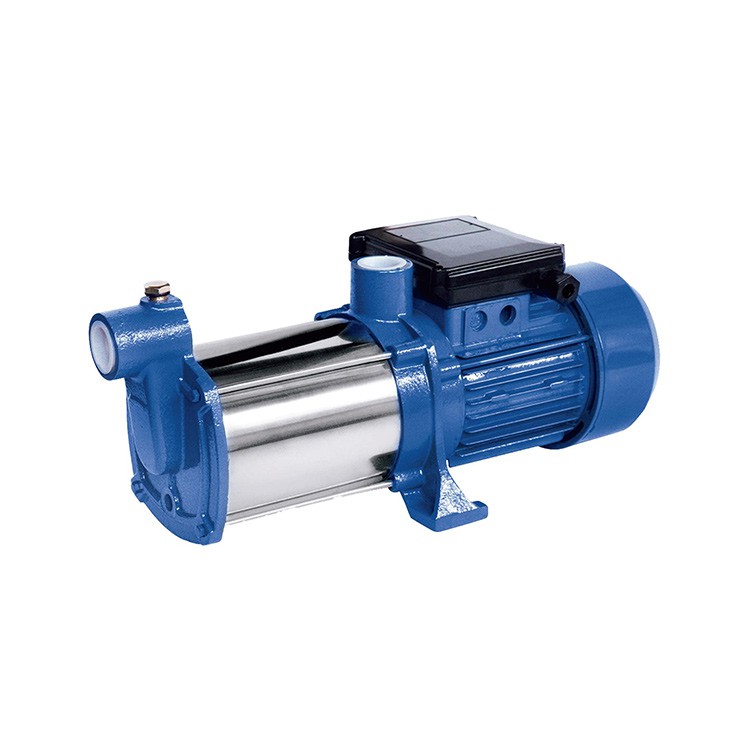

Our Centrifugal Tank Pump is designed for use with above - ground or below - ground storage tanks. It has been engineered to provide a reliable suction lift, ensuring that it can draw water from the tank efficiently. Whether the tank is located a few feet below the pump or at ground level, this pump can handle the task.
The High Pressure Centrifugal Water Pump is ideal for situations where a higher pressure is required in addition to a sufficient suction lift. For example, in a multi - story home, this pump can not only draw water from a well but also provide enough pressure to supply water to the upper floors. Its advanced design allows for a good balance between suction lift and pressure generation.
Our Multistage Centrifugal Pumps are designed for more demanding applications. With multiple impellers in series, these pumps can achieve higher suction lifts and pressures. They are suitable for deep - well applications where the water source is located far below the pump. The multi - stage design helps to overcome the limitations of single - stage pumps by increasing the overall pressure and vacuum - creating ability.
Importance of Proper Suction Lift Calculation
Properly calculating the required suction lift is essential for the successful operation of a centrifugal pump. If the suction lift is underestimated, the pump may not be able to draw water at all. On the other hand, overestimating it can lead to the selection of an oversized or inappropriate pump, which can be costly to purchase and operate.
For example, if you have a well that is 20 feet deep and you choose a pump with a maximum suction lift of only 15 feet, the pump will not be able to draw water from the well. Conversely, if you choose a pump with a very high suction lift capacity for a shallow well, the pump may operate inefficiently, consuming more energy than necessary.
When designing a home water supply system, it's important to consider all the factors mentioned above and calculate the suction lift accurately. This may involve consulting with a professional or using pump selection software provided by the manufacturer.
How to Optimize Suction Lift
Here are some tips to optimize the suction lift of our centrifugal pumps for home use:
Proper Pipe Installation: Use a large - diameter, smooth - walled suction pipe and keep the pipe as short as possible. Minimize the number of bends and fittings in the pipe, as these can increase friction losses.
Priming the Pump: Ensure that the pump is properly primed before starting. Priming involves filling the pump and the suction pipe with water to remove air and create a proper seal. This helps the pump to establish a vacuum more quickly and effectively.
Regular Maintenance: Keep the pump and the suction system clean and well - maintained. Check for leaks in the suction pipe, as even a small leak can allow air to enter and reduce the suction lift. Replace worn - out gaskets and seals promptly.
Contact Us for Your Centrifugal Pump Needs
If you're in the market for a centrifugal pump for your home, understanding the suction lift is just the first step. We, as a supplier of high - quality centrifugal pumps, are here to assist you in selecting the right pump for your specific requirements. Whether you need a Centrifugal Tank Pump for your storage tank, a High Pressure Centrifugal Water Pump for a multi - story home, or a Multistage Centrifugal Pumps for a deep - well application, our team of experts can provide you with detailed information and guidance.
Don't hesitate to reach out to us for a consultation. We can help you calculate the required suction lift, select the appropriate pump model, and ensure a smooth installation process. Let's work together to ensure a reliable and efficient water supply for your home.
References
- Incropera, F. P., & DeWitt, D. P. (2002). Fundamentals of Heat and Mass Transfer. John Wiley & Sons.
- Pump Handbook, 4th Edition, Karassik, I. J., Messina, J. P., Cooper, P. E., & Heald, C. C. (Eds.). McGraw - Hill.
- ASME Standards on Fluid Machinery, American Society of Mechanical Engineers.