

Hey there! As a supplier of centrifugal transfer pumps, I often get asked about the maximum flow rate these pumps can achieve. It's a super important question, especially for those in industries where efficient fluid transfer is key. So, let's dive right in and explore this topic.
First off, what exactly is a centrifugal transfer pump? Well, it's a type of pump that uses centrifugal force to move fluid. The basic principle is simple. The pump has an impeller, which is like a spinning wheel with blades. When the impeller rotates, it creates a low - pressure area at the center, and fluid is drawn in. Then, the spinning impeller flings the fluid outwards at high speed, creating a flow.
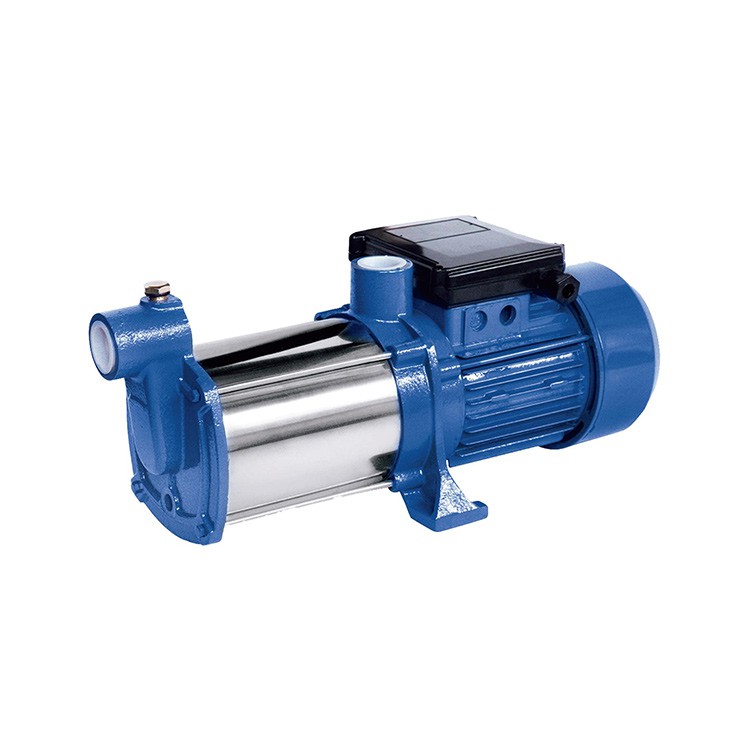

Now, the maximum flow rate of a centrifugal transfer pump isn't a one - size - fits - all number. There are several factors that can influence it.
Pump Design
The design of the pump plays a huge role. Pumps come in different sizes and configurations. For instance, a pump with a larger impeller diameter generally has the potential to achieve a higher flow rate. A bigger impeller can move more fluid with each rotation. Also, the number of impellers matters. Multistage Centrifugal Pumps have multiple impellers stacked in series. Each impeller adds to the pressure and flow, allowing these pumps to reach relatively high flow rates, especially when dealing with high - head applications.
The shape of the impeller blades also affects the flow rate. Different blade shapes are designed for different purposes. Some are optimized for high - flow, low - head applications, while others are better for high - head, low - flow situations.
Motor Power
The motor that drives the pump is another crucial factor. A more powerful motor can spin the impeller faster. The rotational speed of the impeller, measured in revolutions per minute (RPM), is directly related to the flow rate. A higher RPM means the impeller can move more fluid in a given time. However, there are limits. If the motor is too powerful for the pump design, it can cause excessive wear and tear on the pump components and may even lead to cavitation. Cavitation is a phenomenon where bubbles form in the fluid due to low pressure, and when these bubbles collapse, they can damage the impeller and other parts of the pump.
Fluid Properties
The properties of the fluid being pumped can't be ignored. Viscosity is a major one. Viscous fluids, like oil or syrup, are thicker and more resistant to flow compared to water. A pump that can achieve a high flow rate with water may not perform as well with a viscous fluid. The pump has to work harder to move the thicker fluid, which can reduce the flow rate. Density also matters. Heavier fluids require more energy to move, so a pump may have a lower flow rate when pumping a dense fluid compared to a less dense one.
System Resistance
The resistance in the piping system where the pump is installed is a significant factor. If the pipes are too narrow, have too many bends, or include a lot of valves and fittings, it creates more resistance to the fluid flow. This resistance, known as head loss, can reduce the pump's flow rate. The pump has to overcome this resistance to push the fluid through the system. So, a well - designed piping system with minimal head loss is essential for achieving the maximum flow rate.
In some applications, we can estimate the relationship between the flow rate, head, and power using the pump performance curves. These curves are provided by the pump manufacturer and show how the pump will perform under different conditions. They can help us determine the maximum flow rate for a particular pump in a given system.
Let's talk about some real - world scenarios. In a home water supply system, Centrifugal Pump for Home are commonly used. These pumps are usually designed for relatively low - flow applications. The maximum flow rate might be in the range of a few gallons per minute, depending on the size and power of the pump. They are mainly used to move water from a well or a storage tank to the house for daily use.
On the other hand, in industrial settings like chemical plants or oil refineries, centrifugal transfer pumps need to handle large volumes of fluid. These pumps can have much higher flow rates, sometimes reaching hundreds or even thousands of gallons per minute. Stainless Steel Centrifugal Water Pumps are often used in these industrial applications because they are corrosion - resistant and can handle a variety of fluids.
So, what's the absolute maximum flow rate a centrifugal transfer pump can achieve? Well, it's hard to give a specific number. There are some extremely large and powerful industrial pumps that can achieve very high flow rates. In some cases, specialized pumps can reach flow rates of tens of thousands of gallons per minute. But these are usually custom - designed for very specific, large - scale applications.
As a supplier of centrifugal transfer pumps, I can help you select the right pump for your needs. Whether you're looking for a pump for your home or a large - scale industrial application, we have a wide range of options. Our team of experts can analyze your requirements, taking into account factors like the fluid properties, system resistance, and desired flow rate. We can then recommend a pump that will perform optimally and give you the best value for your money.
If you're in the market for a centrifugal transfer pump and want to discuss your specific needs, don't hesitate to reach out. We're here to help you get the most out of your pump and achieve the best possible flow rate for your application.
References
- "Pump Handbook" by Igor Karassik
- "Centrifugal Pumps: Design and Application" by S. Timoshenko and J. N. Goodier