

Hey there! As a supplier of Centrifugal Pump Mini, I'm super stoked to dive into the topic of its flow characteristic curve. You might be wondering, "What on earth is a flow characteristic curve, and why should I care?" Well, stick around, and I'll break it down for you in plain English.
First off, let's get a basic understanding of what a Centrifugal Pump Mini is. These little pumps are like the workhorses of the pumping world, but in a compact size. They're used in a wide range of applications, from small-scale industrial processes to home plumbing systems. They work by using centrifugal force to move fluid through the pump and out into the system.

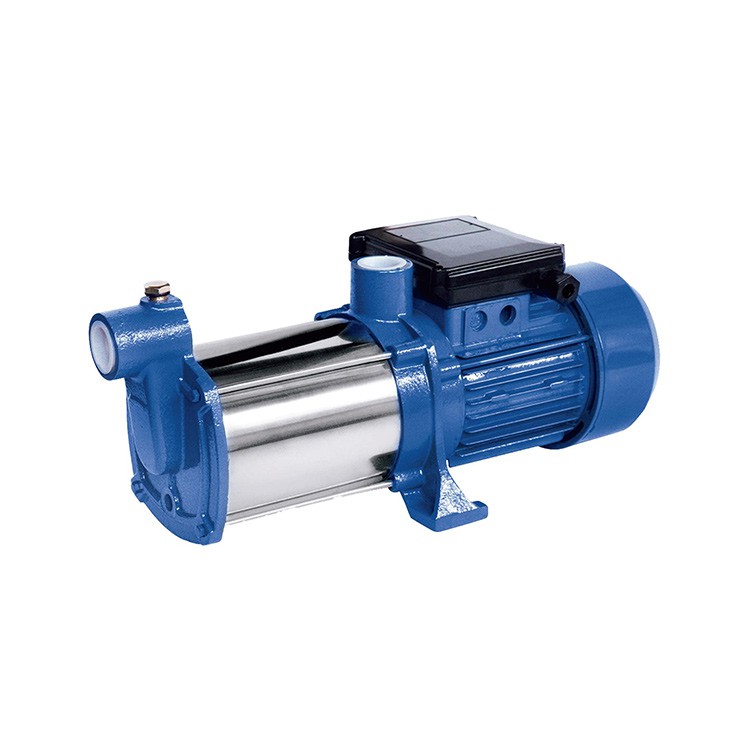
Now, onto the flow characteristic curve. This curve is basically a graphical representation of how the pump performs under different operating conditions. It shows the relationship between the flow rate (how much fluid the pump can move) and the head (the pressure the pump can generate). Think of it as a roadmap that tells you how the pump will behave at different points in its operating range.
The flow characteristic curve of a Centrifugal Pump Mini typically has a few key features. At the beginning of the curve, when the flow rate is low, the head is high. This means that the pump can generate a lot of pressure when it's moving a small amount of fluid. As the flow rate increases, the head decreases. This is because the pump has to work harder to move more fluid, and so the pressure it can generate goes down.
One of the most important things to understand about the flow characteristic curve is the best efficiency point (BEP). This is the point on the curve where the pump operates most efficiently. At the BEP, the pump uses the least amount of energy to move the most amount of fluid. If you operate the pump too far away from the BEP, it can become less efficient, which means you'll end up using more energy and spending more money on your electricity bill.
Another thing to keep in mind is the shut-off head. This is the maximum head that the pump can generate when the flow rate is zero. It's important to know the shut-off head because if the pressure in the system gets too high, it can cause damage to the pump or the piping.
So, why is all of this important? Well, understanding the flow characteristic curve of a Centrifugal Pump Mini can help you choose the right pump for your application. If you know the flow rate and head requirements of your system, you can look at the flow characteristic curve of different pumps and choose the one that will operate closest to its BEP. This will not only save you money on energy costs, but it will also extend the life of the pump.
At our company, we offer a wide range of Centrifugal Pump Mini models, each with its own unique flow characteristic curve. Whether you're looking for a Multistage Centrifugal Pumps for high-pressure applications, a Centrifugal Pump for Hot Water for heating systems, or a Standard Centrifugal Pumps for general-purpose use, we've got you covered.
Our team of experts is always on hand to help you choose the right pump for your needs. We can analyze your system requirements, look at the flow characteristic curves of our pumps, and recommend the best option for you. We also offer installation, maintenance, and repair services to ensure that your pump operates at peak performance for years to come.
If you're in the market for a Centrifugal Pump Mini, don't hesitate to get in touch with us. We'd love to have a chat with you about your requirements and help you find the perfect pump for your application. Whether you're a small business owner, a homeowner, or an industrial operator, we're here to provide you with the best pumping solutions at the best prices.
In conclusion, the flow characteristic curve of a Centrifugal Pump Mini is a crucial tool for understanding how the pump works and choosing the right one for your needs. By paying attention to the key features of the curve, such as the BEP and the shut-off head, you can ensure that your pump operates efficiently and reliably. And if you need any help along the way, our team is here to support you. So, what are you waiting for? Contact us today and let's get started on finding the perfect pump for you.
References:
- Pump Handbook, Karassik et al.
- Hydraulic Institute Standards