

As a trusted supplier of centrifugal transfer pumps, I often encounter inquiries from customers regarding the differences between single - stage and multi - stage centrifugal transfer pumps. This blog post aims to shed light on these differences, helping you make an informed decision when choosing the right pump for your specific needs.
Working Principle
Let's start by understanding the fundamental working principles of these two types of pumps. A single - stage centrifugal transfer pump consists of a single impeller that rotates within a casing. When the impeller spins, it imparts kinetic energy to the fluid. The fluid enters the center of the impeller (the eye) and is then forced outwards by the centrifugal force generated by the rotating impeller. This process converts the kinetic energy into pressure energy, allowing the fluid to be transferred from one place to another.
On the other hand, a multi - stage centrifugal transfer pump Multistage Centrifugal Pumps contains multiple impellers arranged in series within the same casing. Each impeller adds to the pressure of the fluid. As the fluid passes through one impeller, it gains a certain amount of pressure. Then, it moves on to the next impeller, where it gains additional pressure. This cumulative effect enables multi - stage pumps to generate much higher pressures compared to single - stage pumps.
Pressure Generation
One of the most significant differences between single - stage and multi - stage centrifugal transfer pumps lies in their pressure - generating capabilities. Single - stage pumps are typically suitable for applications that require relatively low to medium pressures. They are commonly used in situations such as water supply for small buildings, irrigation systems for small farms, and general industrial applications where the pressure requirements are not extremely high.
In contrast, multi - stage pumps are designed for high - pressure applications. They can achieve pressures that are several times higher than those of single - stage pumps. Industries such as oil and gas, power generation, and high - rise building water supply often rely on multi - stage pumps. For example, in an oil refinery, multi - stage pumps are used to transfer oil over long distances and through pipelines at high pressures. In high - rise buildings, these pumps are essential for providing water to upper floors where the pressure needs to overcome the height of the building.
Flow Rate
When it comes to flow rate, single - stage centrifugal transfer pumps generally have a relatively high flow rate at lower pressures. Their design allows for a large volume of fluid to pass through the pump in a short period. This makes them ideal for applications where a large amount of fluid needs to be moved quickly, such as flood control, large - scale water transfer in municipal water systems, and some industrial processes where high - volume fluid handling is required.
Multi - stage pumps, while capable of generating high pressures, usually have a lower flow rate compared to single - stage pumps at the same power input. The reason is that the multiple impellers in a multi - stage pump are designed to focus on increasing pressure rather than maximizing flow rate. However, this does not mean that multi - stage pumps cannot handle high - flow applications. With proper design and sizing, they can be configured to meet specific flow and pressure requirements simultaneously.
Efficiency
Efficiency is an important consideration in pump selection. Single - stage centrifugal transfer pumps are often more efficient at low to medium pressures and high flow rates. Their simple design with a single impeller results in fewer energy losses due to fluid friction and mechanical inefficiencies. This means that they can transfer a large amount of fluid with relatively less energy consumption under the right operating conditions.
Multi - stage pumps, on the other hand, are more efficient when operating at high pressures. Although they have multiple impellers, which can increase mechanical complexity and potential energy losses, their ability to generate high pressures with relatively less power input compared to using multiple single - stage pumps in series makes them a more energy - efficient choice for high - pressure applications. However, it is crucial to ensure that the multi - stage pump is properly sized and operated within its optimal range to achieve maximum efficiency.
Size and Space Requirements
In terms of size and space requirements, single - stage centrifugal transfer pumps are generally more compact. Their simple design with a single impeller and fewer components results in a smaller physical footprint. This makes them suitable for applications where space is limited, such as small workshops, mobile pumping units, and some domestic installations.
Multi - stage pumps, due to their multiple impellers and more complex internal structure, are usually larger in size. They require more space for installation and maintenance. However, advancements in pump design have led to the development of more compact multi - stage pumps, but in general, they still take up more space compared to single - stage pumps.
Cost
Cost is another factor that customers often consider when choosing between single - stage and multi - stage centrifugal transfer pumps. Single - stage pumps are generally less expensive to purchase. Their simpler design and fewer components result in lower manufacturing costs, which are then passed on to the customers. Additionally, the maintenance costs of single - stage pumps are also relatively low, as there are fewer parts to replace and maintain.
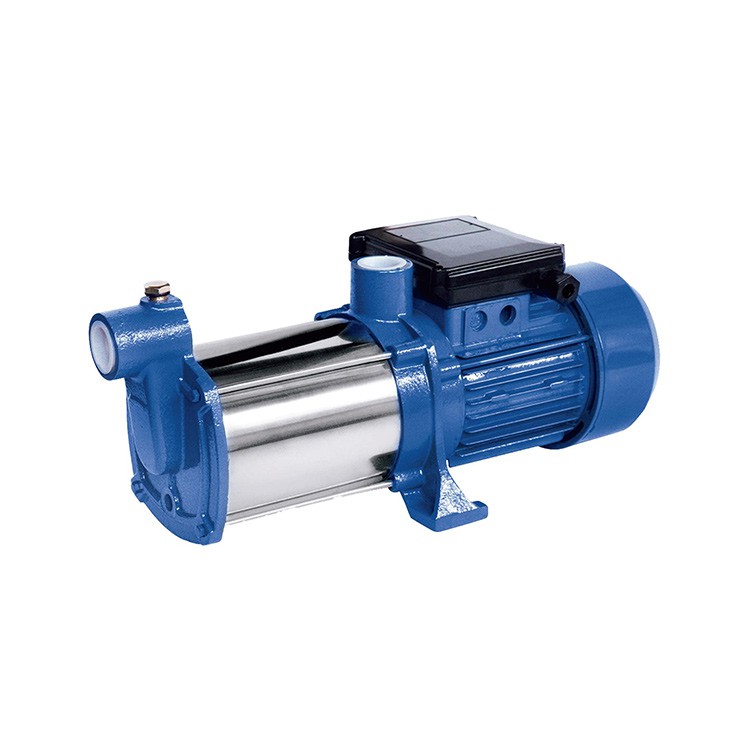

Multi - stage pumps, being more complex and having more components, are more expensive to purchase. The additional cost is due to the higher manufacturing complexity, the need for more precise engineering, and the use of higher - quality materials to withstand the high pressures. Moreover, the maintenance costs of multi - stage pumps can also be higher, as more parts need to be inspected and potentially replaced over time.
Applications
Single - stage centrifugal transfer pumps are widely used in a variety of applications. Some common uses include:
- Domestic Water Supply: For supplying water to homes and small apartments.
- Irrigation: In small - scale agricultural irrigation systems.
- General Industrial Processes: Such as transferring liquids in chemical plants and food processing facilities where low to medium pressures are sufficient.
Multi - stage centrifugal transfer pumps are essential in applications that demand high pressures:
- Oil and Gas Industry: For pipeline transportation of oil and gas over long distances.
- Power Generation: In boiler feedwater systems and cooling water circulation in power plants.
- High - Rise Building Water Supply: To ensure adequate water pressure on upper floors.
Conclusion
In conclusion, the choice between single - stage and multi - stage centrifugal transfer pumps depends on your specific application requirements. If you need to transfer a large volume of fluid at low to medium pressures, a single - stage pump Standard Centrifugal Pumps is likely the better option. It offers high flow rates, lower costs, and relatively high efficiency in such conditions.
However, if your application requires high pressures, such as in high - rise buildings, oil and gas pipelines, or power generation, a multi - stage pump High Pressure Centrifugal Water Pump is the more suitable choice. Despite their higher cost and larger size, they can provide the necessary pressure to meet your needs efficiently.
As a centrifugal transfer pump supplier, we have a wide range of single - stage and multi - stage pumps to meet diverse customer requirements. If you are still unsure which type of pump is right for your application, or if you have any other questions regarding our products, please feel free to contact us. We are here to help you make the best decision and provide you with high - quality pumps that meet your specific needs.
References
- Karassik, I. J., Messina, J. P., Cooper, P. T., & Heald, C. C. (2008). Pump Handbook. McGraw - Hill.
- Stepanoff, A. J. (1957). Centrifugal and Axial Flow Pumps: Theory, Design, and Application. Wiley.