

Hey there! As a supplier of centrifugal pumps, I've been dealing with these amazing machines for quite some time. One of the most crucial aspects of centrifugal pumps is their seals. Seals play a vital role in preventing leakage, ensuring the pump's efficiency, and protecting the environment. In this blog, I'm gonna walk you through the different types of seals used in centrifugal pumps.
1. Packing Seals
Packing seals are one of the oldest and most common types of seals used in centrifugal pumps. They consist of a series of rings made from materials like asbestos, graphite, or synthetic fibers. These rings are packed around the pump shaft in the stuffing box.
The way packing seals work is pretty straightforward. When the packing is tightened, it creates a seal against the shaft, preventing the fluid from leaking out. The pressure applied to the packing can be adjusted to control the leakage rate. However, a small amount of leakage is usually allowed to lubricate and cool the packing.
One of the advantages of packing seals is their low cost. They're also relatively easy to install and replace. But there are some downsides too. Packing seals require regular maintenance, as they tend to wear out over time. Also, they can cause some friction on the shaft, which may lead to increased energy consumption and shaft wear.
2. Mechanical Seals
Mechanical seals are a more advanced type of seal compared to packing seals. They're widely used in modern centrifugal pumps because of their superior performance.
A mechanical seal consists of two flat faces - a rotating face attached to the pump shaft and a stationary face mounted in the pump housing. These faces are pressed together by a spring or other means, creating a seal that prevents fluid leakage. The faces are usually made from materials like carbon, ceramic, or silicon carbide, which are highly resistant to wear and corrosion.
One of the main advantages of mechanical seals is their low leakage rate. They can significantly reduce the amount of fluid that escapes from the pump, which is great for both efficiency and environmental protection. They also require less maintenance compared to packing seals, as they have fewer moving parts and less friction.
However, mechanical seals are more expensive than packing seals. They also need to be installed correctly, or they may not work properly. If you're interested in pumps with mechanical seals, you can check out our Centrifugal Pump Mini. It's a great option for applications where low leakage and high reliability are required.
3. Cartridge Seals
Cartridge seals are a type of mechanical seal that comes pre-assembled in a cartridge. This makes them very easy to install and replace.
The main advantage of cartridge seals is their ease of installation. Since they're pre-assembled, you don't have to worry about aligning the different parts correctly. This can save a lot of time and effort, especially in large-scale pump installations.
Cartridge seals also offer good performance in terms of leakage prevention. They're designed to be highly reliable and can withstand a wide range of operating conditions. However, like other mechanical seals, they can be more expensive than packing seals. Our High Pressure Centrifugal Water Pump is equipped with cartridge seals, ensuring high performance and easy maintenance.
4. Split Seals
Split seals are another type of mechanical seal that's designed for easy installation and replacement, especially in pumps that are difficult to disassemble.
As the name suggests, split seals are made up of two halves that can be easily split apart and installed around the pump shaft without having to remove the shaft or other components. This makes them a great option for pumps that are in hard-to-reach locations or for applications where downtime needs to be minimized.
Split seals offer similar performance to other mechanical seals in terms of leakage prevention. They're also relatively easy to maintain. But they may not be as suitable for high-speed or high-pressure applications as some other types of seals.
5. Gas Seals
Gas seals are used in applications where the pumped fluid is a gas or where a gas barrier is needed to prevent the leakage of the pumped fluid.
Gas seals work by creating a barrier of gas between the pump shaft and the pump housing. This gas barrier prevents the fluid from leaking out. Gas seals are often used in pumps that handle volatile or hazardous fluids, as they can provide an extra layer of protection.
One of the advantages of gas seals is their high reliability. They can effectively prevent the leakage of gas or fluid, even under high-pressure conditions. However, gas seals require a complex control system to maintain the gas barrier, which can increase the cost and complexity of the pump system.
Choosing the Right Seal
When it comes to choosing the right seal for your centrifugal pump, there are several factors to consider. First, you need to think about the type of fluid that the pump will be handling. If the fluid is corrosive or abrasive, you'll need a seal that's resistant to these properties. For example, if you're pumping a highly acidic fluid, a mechanical seal with ceramic faces may be a good choice.
The operating conditions of the pump are also important. If the pump will be running at high speeds or high pressures, you'll need a seal that can withstand these conditions. Cartridge seals or mechanical seals with high-performance materials are often a good option for high-speed or high-pressure applications.
Cost is another factor to consider. If you're on a tight budget, packing seals may be a more suitable choice. But if you're looking for long-term performance and low maintenance, mechanical seals or cartridge seals may be worth the extra investment.
Our Centrifugal Pump Range
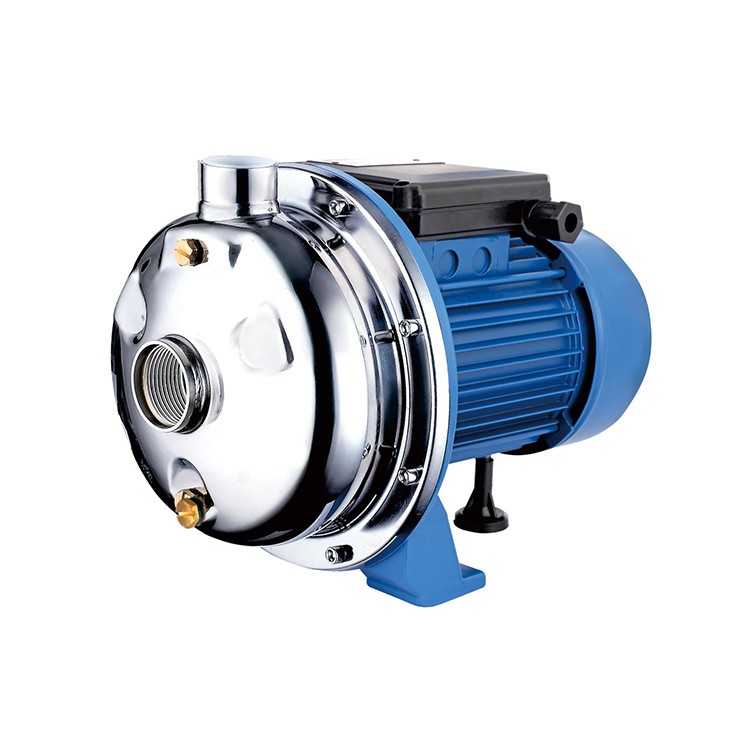
At our company, we offer a wide range of centrifugal pumps with different types of seals to meet your specific needs. Whether you're looking for a small, efficient pump like our Centrifugal Pump Mini or a high-capacity pump like our High Volume Centrifugal Pump, we've got you covered.
Our pumps are designed to provide reliable performance and long service life. We use high-quality materials and advanced manufacturing techniques to ensure that our pumps and seals meet the highest standards.
If you're in the market for a centrifugal pump and need help choosing the right seal or pump for your application, don't hesitate to contact us. Our team of experts is always ready to assist you. We can provide you with detailed information about our products, help you with installation and maintenance, and even offer customized solutions to meet your unique requirements.

So, if you're interested in learning more about our centrifugal pumps or want to discuss your specific needs, just reach out to us. We're looking forward to working with you and helping you find the perfect pump for your project.
References
- "Centrifugal Pumps: Design and Application" by Igor J. Karassik et al.
- "Pump Handbook" by Igor J. Karassik et al.
- Various industry publications and technical papers on pump seals.