

Hey there! As a supplier of centrifugal transfer pumps, I've had the chance to get up close and personal with these nifty machines. Today, I'm gonna break down the main components of a centrifugal transfer pump for you.
1. Impeller
The impeller is like the heart of the centrifugal transfer pump. It's a rotating component with vanes that spin at high speeds. When the pump is in operation, the impeller sucks in the fluid through the eye, which is the central opening. As it rotates, the vanes of the impeller push the fluid outward towards the pump casing. This creates a centrifugal force that increases the fluid's velocity and pressure.
There are different types of impellers, too. You've got the open impeller, which has vanes that are exposed on one side. It's great for handling fluids with solids or debris because there's less chance of clogging. Then there's the semi - open impeller, which has a shroud on one side of the vanes. This helps to direct the flow of the fluid more efficiently. And the closed impeller has shrouds on both sides of the vanes, providing even better efficiency but is more prone to clogging with solids. If you're looking for a centrifugal pump for handling wastewater, you might want to check out Centrifugal Pump Wastewater, which is designed to work well with the type of fluids that require a specific impeller design.
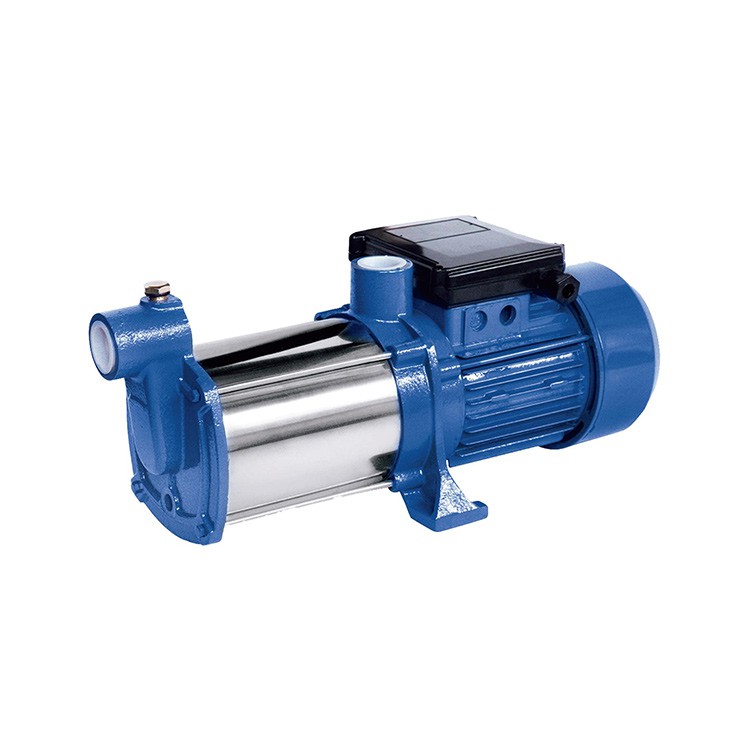

2. Casing
The casing is the outer shell of the pump that encloses the impeller. Its main job is to collect the fluid that's been accelerated by the impeller and convert the kinetic energy of the fluid into pressure energy. There are two common types of casings: the volute casing and the diffuser casing.
A volute casing has a spiral - shaped chamber that gradually increases in cross - sectional area as it goes around the impeller. This design allows the fluid to slow down gradually, which in turn converts the kinetic energy into pressure energy. It's a simple and cost - effective design that's widely used in many centrifugal pumps.
On the other hand, a diffuser casing has a series of stationary vanes arranged around the impeller. These vanes help to guide the fluid and gradually increase its pressure as it moves through the pump. Diffuser casings are often used in high - efficiency pumps, especially Multistage Centrifugal Pumps, where multiple impellers are used in series to achieve higher pressures.
3. Shaft
The shaft is what connects the impeller to the motor. It transfers the rotational power from the motor to the impeller, allowing the impeller to spin at the required speed. The shaft needs to be strong and rigid enough to handle the torque and forces generated during operation. It's usually made of high - strength materials like stainless steel or carbon steel.
To keep the shaft in place and reduce friction, bearings are used. There are two main types of bearings in a centrifugal pump: radial bearings and thrust bearings. Radial bearings support the shaft radially, preventing it from moving side - to - side. Thrust bearings, on the other hand, support the axial forces generated by the impeller, which can push the shaft forward or backward.
4. Seals
Seals are crucial components in a centrifugal transfer pump because they prevent the fluid from leaking out of the pump along the shaft. There are two common types of seals: packing seals and mechanical seals.
Packing seals consist of a soft material, like graphite or asbestos - free packing, that's packed around the shaft in the stuffing box. The packing is compressed to create a seal against the shaft. While packing seals are relatively inexpensive, they require regular maintenance and adjustment to prevent leakage.
Mechanical seals are more advanced and reliable. They consist of two flat surfaces, one fixed to the pump casing and the other rotating with the shaft. These surfaces are held together by a spring, creating a tight seal. Mechanical seals are more expensive than packing seals, but they offer better performance and require less maintenance. If you're using a centrifugal pump at home, you might want to consider a pump with a good seal, like those in Centrifugal Pump for Home.
5. Motor
The motor is what provides the power to drive the pump. It can be an electric motor, a diesel engine, or even a steam turbine in some industrial applications. Electric motors are the most common choice for centrifugal transfer pumps because they're clean, efficient, and easy to control.
When choosing a motor for a centrifugal pump, you need to consider factors like the power rating, speed, and voltage. The power rating of the motor should be sufficient to drive the pump at the required flow rate and pressure. The speed of the motor determines the speed of the impeller, which in turn affects the pump's performance. And the voltage should match the electrical supply available at the installation site.
6. Suction and Discharge Pipes
The suction pipe is the pipe that connects the pump to the source of the fluid. It needs to be properly sized and installed to ensure that the pump can suck in the fluid efficiently. The diameter of the suction pipe should be large enough to prevent excessive friction losses, and it should be free of any restrictions or blockages.
The discharge pipe is the pipe that carries the fluid from the pump to its destination. Similar to the suction pipe, it needs to be properly sized to handle the flow rate and pressure of the fluid. The discharge pipe may also include valves and fittings to control the flow and pressure of the fluid.
Why These Components Matter
Each of these components plays a vital role in the overall performance of the centrifugal transfer pump. If one component fails or doesn't work properly, it can affect the pump's efficiency, reliability, and even its lifespan. For example, a worn - out impeller can reduce the pump's flow rate and pressure, while a leaking seal can lead to fluid loss and environmental contamination.
As a supplier, I understand the importance of using high - quality components in our pumps. We source the best materials and use the latest manufacturing techniques to ensure that our pumps are durable, efficient, and reliable. Whether you need a pump for wastewater treatment, home use, or industrial applications, we've got a solution for you.
If you're in the market for a centrifugal transfer pump, I'd love to talk to you about your specific needs. We can work together to find the right pump with the right components for your application. Don't hesitate to reach out and start the conversation about procurement.
References
- "Centrifugal Pumps: Design and Application" by Igor J. Karassik et al.
- "Pump Handbook" by Irving J. Karassik et al.