

Hey there, if you've been scouring for ways to power your garden's showstopper fountain without racking up utility bills, you've probably stumbled on the idea of using a solar deep well pump. As someone who's been selling these Solar Deep Well Pumps for years (and testing them on my own backyard fountain, full transparency here), I get why you'd have questions. Let's cut through the noise: short answer? Yes, you totally can-but there are some key things to nail down to make it work like a charm, not a dud.
First, let's make sure we're on the same page. A lot of folks mix up solar well pumps with regular garden water pumps, but Solar Deep Well Submersible Pump is built to pull water from 100+ feet underground, not just a shallow pond. That's a big difference. Fountains, especially large ones or those with tall spouts, need consistent flow rates and enough pressure to push water up high. So if your fountain's current pump is struggling to keep up because it's drawing from a shallow source that dries up in summer, swapping to a solar deep well model might be exactly what you need. But wait-there's a catch here: not every solar deep well pump is made for fountain use, and not every fountain setup will work with one. Let's break this down step by step, no jargon, promise.
First: Do You Even Need a Deep Well Pump for Your Fountain?
This is the first question I ask every customer who reaches out about this. If your fountain's water source is a shallow pond, creek, or even a rain barrel (like, 10 feet deep max), a regular solar pond pump will do just fine-they're cheaper, simpler, and designed for low-lift applications. But if your fountain is sitting where the only reliable water source is a private well (say, 50 feet down) that never runs dry? That's when Solar Powered Water Pumps for Deep Wells becomes the game-changer. No more refilling 5-gallon buckets every week, no more hooking up to grid power that's a mile away-just pull water straight from the ground.
Another scenario: if your fountain has multiple levels, a misting feature, or needs enough flow to create that dramatic, splashing effect you see in luxury backyard designs. Those higher flow rates and pressure needs? A shallow pump might peter out on a sunny day, but a submersible deep well solar pump is built to maintain consistent performance even when the sun's bright. I've seen customers install these for fountains in commercial properties too-like small parks or wedding venues-where they need the fountain running reliably for hours on end without maintenance. That said, if you're just doing a small tabletop fountain that draws from a birdbath, save yourself the hassle and go with a basic solar pump.
Next: The Technical Stuff (But Make It Simple)
Okay, let's get into the nitty-gritty without boring you to death. When pairing a solar deep well pump with a fountain, there are three main specs you need to check: flow rate, head pressure, and solar panel size. These are the make-or-break factors-skip checking them, and you'll end up with a fountain that trickles instead of wows.
First up: flow rate. This is how much water the pump moves per minute (usually measured in gallons per minute, or GPM). For most residential fountains, you'll want between 2 and 10 GPM, depending on size. A small patio fountain might need 2-3 GPM, while a large, multi-tiered one could need 8-10 GPM. The key here is that the pump has to push that much water up to your fountain. If your well is 70 feet deep and your fountain is another 10 feet above ground, that's 80 feet of total "head" (the vertical distance the pump has to lift water). That's where Solar Powered Submersible Deep Well Water Pumps shine-they're engineered to handle high head pressures without losing flow.
Wait, let's clarify head pressure, because this trips a lot of people up. If your well is 50 feet down, that's 50 feet of static head, but then you add the horizontal pipe run to your fountain (say, 20 feet) and the height of the fountain (another 15 feet), that's total dynamic head-around 85 feet. If you buy a pump rated for 50 feet of head, it's not going to push enough water to your fountain. You have to calculate that total dynamic head first, then pick a pump that can handle that and your desired flow rate. I always tell customers to round up-better to have a little extra capacity than end up with a sad, weak fountain.
Then there's the solar panel size. Solar pumps run on DC power, right? So the wattage of your panels has to match the pump's voltage. Most residential solar deep well pumps are 12V, 24V, or 48V. A 12V pump for a small fountain might only need a 50W panel, but a 48V pump for a large fountain with high head will need 200W or more. Here's a pro tip: if you live in an area with lots of cloudy days (like the Pacific Northwest or parts of the UK), add 20-30% more panel wattage than the minimum. Solar pumps are most efficient when they get direct sun, so if you want your fountain running on overcast days, that extra capacity will keep it going. No one wants a fountain that shuts off every time a cloud passes by, trust me.
The Perks (Because Let's Be Real, That's Why You Care)
Okay, beyond "it works," what's the upside of using a solar deep well pump for your fountain? Let's count the ways. First, no utility bills. I've had customers tell me their old grid-powered fountain was adding $15-$20 a month to their electric bill-cut that out entirely with solar. For a pump that runs 8 hours a day, that's like saving $200 a year, and that's money you can spend on fountain upgrades instead.
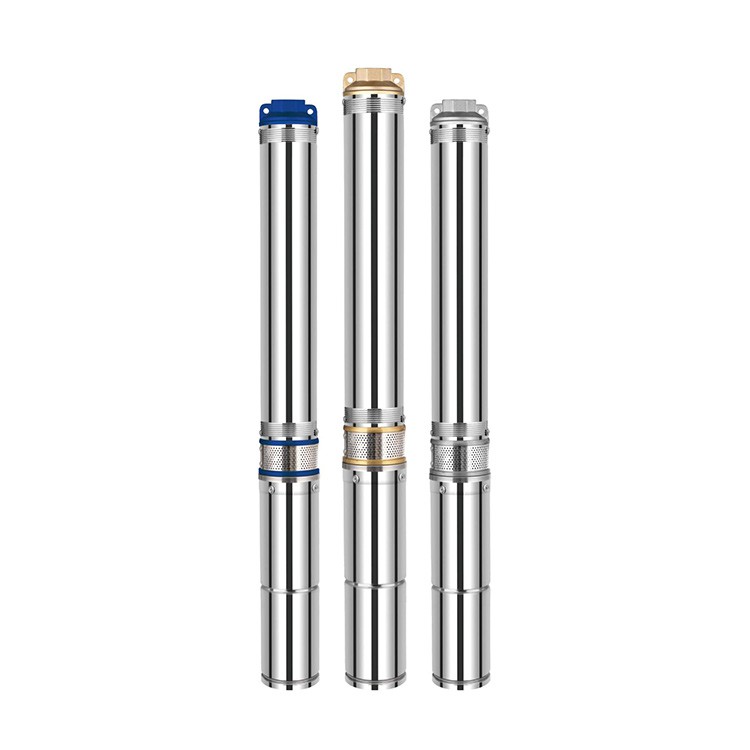

Second, low maintenance. Deep well submersible pumps are sealed and sit underwater, so they don't get covered in leaves, dirt, or debris like above-ground pond pumps. Less cleaning, fewer clogs, no worrying about them getting damaged by lawnmowers or animals. I've got my own Solar Deep Well Pumps running in my backyard fountain, and the only maintenance I do is wipe the fountain basin once a month-way easier than messing with a regular pump.
Third, off-grid friendly. If your fountain is in a remote spot (like a backyard oasis that's far from your house's power lines), running an extension cord is a hassle and a safety risk. Solar eliminates that-no trenching, no electrical permits, no messing with utilities. We've had customers use these for fountains in vacation homes, or even as part of small water features in community gardens. It's all about autonomy.
Wait, but what about when there's no sun? Most solar deep well pumps come with battery compatibility, right? You can add a small solar battery bank (like a 100Ah lithium battery) to store excess power for cloudy days or night operation. Just keep in mind: if you run your fountain at night, you'll need a bigger battery. For most people, running it during the day (when the sun's out, and the fountain looks best anyway) is enough, but batteries are an option if you want round-the-clock flow.
The Potential Hiccups (Let's Be Honest, No Setup Is Perfect)
Now, let's talk about the downsides so you're not caught off guard. First, upfront cost. Solar deep well pumps aren't cheap-you're looking at $500-$2,000 depending on size and features, plus the solar panels and battery if you add them. Compare that to a $100 pond pump, and it's a big investment. But over time, you save on electricity and maintenance, so it balances out. For most customers, it's worth it, especially if they're going for a high-end, long-term fountain setup.
Second, sizing mistakes are common. This is the number one mistake I see people make. They buy a pump based on well depth alone, not factoring in the fountain height or pipe runs. Last year, a customer came to me with a fountain that was trickling, and it turned out he'd bought a pump rated for his 60-foot well, but his fountain was another 30 feet above ground-total head 90 feet, way more than the pump could handle. We swapped it for a higher-head model, and he was thrilled. Always, always calculate total dynamic head before buying.
Third, well water quality. If your well has a lot of sediment, iron, or minerals, that can clog the pump's intake screen over time. Most solar deep well pumps have a pre-filter, but you'll want to clean it every few months to keep it running smoothly. If your water is super high in minerals, you might need a special filter or even a water softener, but that's rare for residential wells.
Real-World Examples (Because Stories Hit Different)
Let me give you a couple quick stories from my customers to make this concrete. Last summer, a family in Ohio contacted me about a 10-tiered fountain in their backyard. Their only water source was a 75-foot well, and they'd been hauling water from a neighbor's house to keep the fountain going-total nightmare. We sold them a 24V Solar Deep Well Submersible Pump rated for 100 feet of head and 8 GPM, plus a 200W solar panel. They installed it in a day (no electrician needed), and now their fountain runs 8 hours a day, every sunny day. They texted me a video last month of it running in the rain (well, light rain, not a downpour) and said they haven't hauled a single bucket since.
Another customer is a small café in Florida with a fountain out front. They were using a grid-powered pump that kept burning out in the humid, salty air, and their electric bill was through the roof. We set them up with a 12V solar deep well pump, a small battery, and now their fountain runs 12 hours a day, with no more maintenance calls. They saved $120 a month on electricity, and the pump has lasted 18 months so far-way longer than their old one.
So, Should You Do This?
Let's wrap it up. You can use a solar deep well pump for fountain water circulation, but only if:
- Your fountain's water source is a deep well (not shallow water like a pond or rain barrel)
- You calculate total dynamic head (well depth + fountain height + pipe runs) to pick the right pump
- You size your solar panels for your pump's voltage and local sunlight
- You don't mind a slightly higher upfront cost for long-term savings
If any of those don't fit-like you have a shallow water source, or your fountain is tiny-stick to a regular solar pond pump. It'll work better, be cheaper, and less headache. But if you're looking for a reliable, off-grid, low-maintenance way to power a larger or multi-tiered fountain from a deep well? A solar deep well pump is the way to go.
Ready to Make the Switch?
If you're researching pumps, checking specs, or have questions about sizing for your specific fountain and well, our team of solar pump experts is here to help. We can walk you through calculating your head, matching the right pump to your needs, and even give tips on installation (it's usually DIY-friendly, too). Don't guess-get the right pump the first time and avoid that "trickling fountain" headache. Reach out to our team today to chat through your project, no pressure, just honest advice.
References
- Solar Water Pump Association. (2022). Guidelines for Sizing Solar-Powered Water Pumps for Residential Applications.
- U.S. Department of Energy. (2023). Off-Grid Solar Systems: Pumping Water for Livestock and Recreation.
- Fountain Care Journal. (2021). Choosing the Right Pump for Fountain Circulation: Head Pressure and Flow Rate Basics.