

Can a centrifugal transfer pump be used in a vacuum environment? Well, that's a question I get asked a lot as a centrifugal transfer pump supplier. Let's dive into it and take a closer look at the ins and outs of using these pumps in such tricky conditions.
First off, let's quickly go over how a centrifugal transfer pump works. In a normal situation, the impeller in the pump spins, creating centrifugal force. This force throws the fluid outwards from the center of the impeller, which in turn creates a low - pressure area at the center. The fluid is then sucked into the pump through the inlet and pushed out through the outlet. It's a pretty straightforward process and works great in a standard, atmospheric environment.
Now, what happens when you move this pump into a vacuum environment? In a vacuum, the key issue we run into is the lack of pressure. You see, in a normal atmosphere, the ambient air pressure helps the pump to draw fluid in. But when there's a vacuum, there's very little to no pressure to assist this sucking action.
One of the main problems is cavitation. Cavitation is when the pressure of the fluid inside the pump drops below the vapor pressure of the fluid. When this happens, vapor bubbles form in the fluid. As these bubbles move to areas of higher pressure within the pump, they collapse suddenly. This collapse creates shockwaves that can damage the impeller and other internal components of the pump over time. In a vacuum environment, the risk of cavitation is significantly higher because the pressure is already extremely low.
Another problem is the ability of the pump to prime. Priming is the process of filling the pump with the fluid to be pumped so that it can start working properly. In a vacuum environment, it can be really hard to get the pump primed. Without proper priming, the pump won't be able to generate the necessary flow and pressure.
However, that doesn't mean that a centrifugal transfer pump can never be used in a vacuum environment. There are some special cases where it might work. For example, if the fluid being pumped has a very low viscosity and the vacuum is not a complete vacuum but rather a partial one. Also, if the system is designed in a way to minimize the pressure drop and the risk of cavitation.
At our company, we offer a variety of centrifugal pumps, each with their own features and suitability for different applications. If you're thinking about using a centrifugal pump in a vacuum - related setup, here are some of our options:
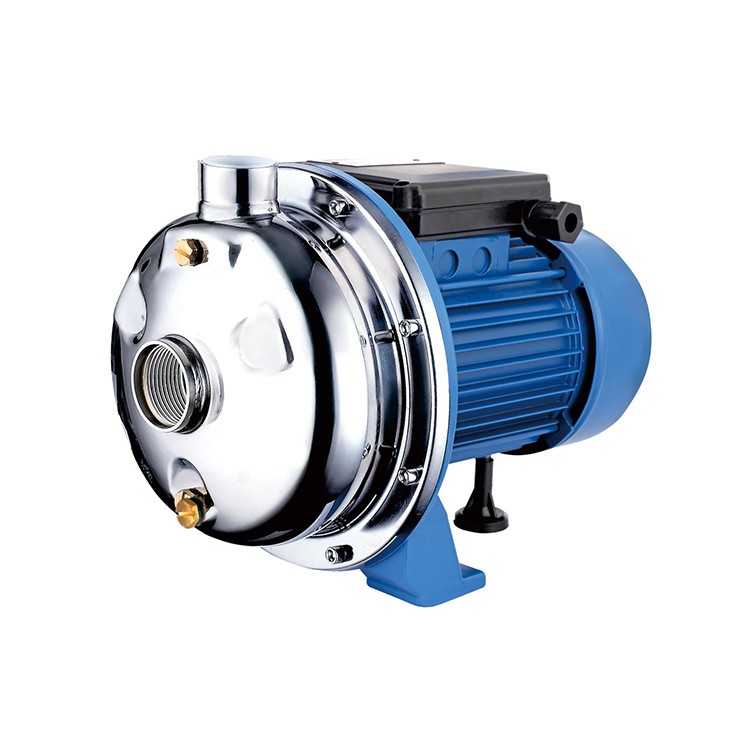

The Centrifugal Pump Mini is a great little pump. It's compact and can be used in some low - flow applications. Its small size might give it an edge in certain vacuum setups where space is limited.
Our Standard Centrifugal Pumps are reliable workhorses. They are designed for a wide range of applications and offer good performance in normal conditions. With some modifications and careful system design, they could potentially be used in a partial vacuum environment.
For more demanding applications, our Cast Iron Centrifugal Pumps are built tough. Made from cast iron, they are more durable and can withstand harsher conditions. If you need a pump that can handle a bit more stress while trying to operate in a vacuum - adjacent environment, these are a great option.
If you're still not sure whether a centrifugal transfer pump is the right choice for your vacuum application, don't worry. Our team of experts is here to help. We've got years of experience in the field and can offer you customized solutions based on your specific needs. Just reach out to us, and we can have a detailed discussion about your project. Whether you need advice on pump selection, system design, or installation, we'll be there every step of the way.
In conclusion, while using a centrifugal transfer pump in a vacuum environment is challenging, it's not impossible. With the right pump selection, system design, and some careful planning, you might be able to make it work. So don't hesitate to get in touch if you're considering using a centrifugal pump for your vacuum - related needs.
References:
- "Pump Handbook" by Karassik, Messina, Cooper, and Heald.
- "Centrifugal Pumps - Operation and Maintenance" by various industry experts.