

As a supplier of Centrifugal Transfer Pumps, I often encounter inquiries from customers about the feasibility of using our pumps for gas - liquid mixtures. This is a crucial question, as many industrial and commercial applications involve handling such mixtures. In this blog, I will delve into the technical aspects of whether a centrifugal transfer pump can be used for gas - liquid mixtures, the challenges involved, and the potential solutions.
How Centrifugal Transfer Pumps Work
Before we discuss the use of centrifugal transfer pumps for gas - liquid mixtures, it's essential to understand how these pumps operate. A centrifugal transfer pump works on the principle of centrifugal force. The pump consists of an impeller, which is a rotating component with vanes. When the impeller rotates, it imparts kinetic energy to the fluid (either liquid or a mixture) by accelerating it radially outward. This kinetic energy is then converted into pressure energy as the fluid moves through the volute or diffuser of the pump, which is designed to slow down the fluid and increase its pressure.
In a typical liquid - only application, the process is relatively straightforward. The liquid fills the impeller passages, and the rotation of the impeller creates a continuous flow of the liquid from the inlet to the outlet of the pump. However, when a gas - liquid mixture is introduced, the dynamics change significantly.
Challenges of Using Centrifugal Transfer Pumps for Gas - Liquid Mixtures
Gas Binding
One of the most significant challenges is gas binding. Gas has a much lower density than liquid. When a large amount of gas enters the pump, it can accumulate in the impeller passages. Since the impeller is designed to work with a relatively dense fluid, the presence of gas reduces the efficiency of the impeller in transferring energy to the fluid. As a result, the pump may lose its ability to generate sufficient pressure to move the mixture, leading to a decrease in flow rate or even a complete stoppage of the pump.
Cavitation
Cavitation is another issue that can occur when handling gas - liquid mixtures. Cavitation happens when the pressure in the pump drops below the vapor pressure of the liquid. In a gas - liquid mixture, the presence of gas can exacerbate this problem. The gas bubbles can act as nuclei for the formation of vapor bubbles. When these bubbles collapse near the impeller vanes, they can cause damage to the impeller surface, leading to pitting, erosion, and reduced pump lifespan.
Reduced Efficiency
The efficiency of a centrifugal transfer pump is highly dependent on the fluid properties. Gas - liquid mixtures have different physical properties compared to pure liquids, such as lower density and viscosity. These differences can lead to a significant reduction in the pump's efficiency. The pump may require more power to achieve the same flow rate and pressure as it would with a pure liquid, resulting in higher operating costs.
Applications Where Centrifugal Transfer Pumps Can Handle Gas - Liquid Mixtures
Despite the challenges, there are certain applications where centrifugal transfer pumps can be used for gas - liquid mixtures.
Low Gas Fraction Applications
In applications where the gas fraction in the mixture is relatively low (typically less than 5 - 10%), centrifugal transfer pumps can often operate effectively. For example, in some chemical processes where small amounts of gas are entrained in the liquid during a reaction, a well - designed centrifugal pump can handle the mixture without significant issues. The key is to ensure that the pump is properly sized and selected for the specific application, taking into account the expected gas fraction.
Two - Phase Flow with Separation
In some systems, a centrifugal transfer pump can be used in conjunction with a gas - liquid separator. The separator removes a significant portion of the gas from the mixture before it enters the pump. This way, the pump mainly handles the liquid phase, reducing the risk of gas binding and cavitation. After the liquid has been pumped, the separated gas can be handled separately or recombined with the liquid downstream if necessary.

Solutions for Using Centrifugal Transfer Pumps with Gas - Liquid Mixtures
Specialized Pump Designs
Some manufacturers, including our company, offer specialized centrifugal transfer pumps designed to handle gas - liquid mixtures. These pumps may have modified impeller designs, such as wider impeller passages or special vane shapes, to accommodate the presence of gas. Additionally, they may incorporate features like gas vents or bypass lines to remove excess gas from the pump and prevent gas binding.
Proper System Design
Proper system design is crucial when using centrifugal transfer pumps for gas - liquid mixtures. This includes ensuring that the suction piping is properly sized and configured to minimize the entrainment of gas. A well - designed suction tank or reservoir can also help to separate some of the gas from the liquid before it enters the pump. Furthermore, the use of pressure - regulating valves and flow - control devices can help to maintain stable operating conditions and prevent cavitation.
Our Product Range and Suitability for Gas - Liquid Mixtures
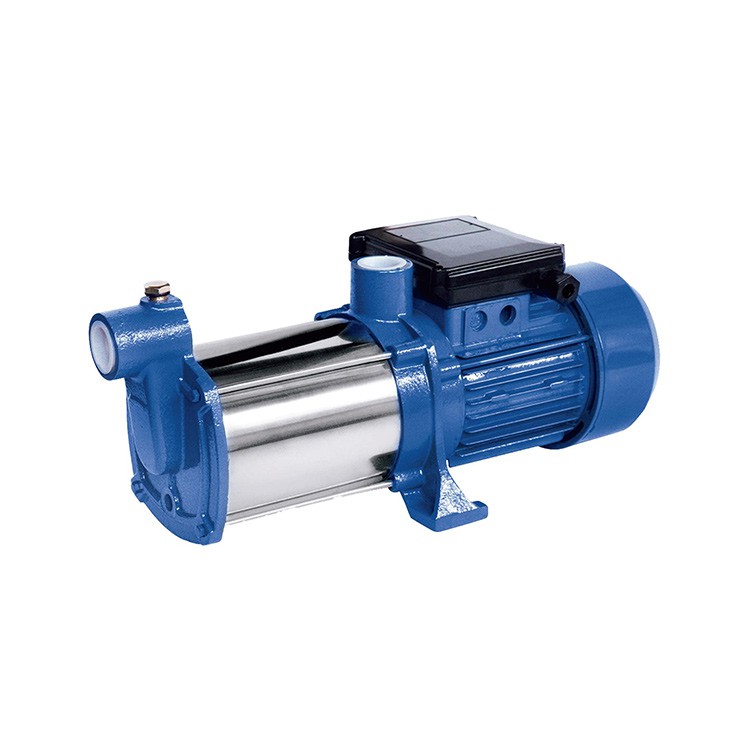
We offer a wide range of centrifugal transfer pumps, including Stainless Steel Centrifugal Water Pumps, Centrifugal Pump for Agriculture, and Multistage Centrifugal Pumps. While not all of our pumps are suitable for gas - liquid mixtures, we have models that can be customized or specifically designed for such applications.
Our stainless - steel centrifugal water pumps are known for their durability and corrosion resistance. With the right modifications, they can be used in applications where a small amount of gas is present in the water. Our centrifugal pumps for agriculture can also be adapted to handle gas - liquid mixtures in irrigation systems where air may be entrained in the water supply. Multistage centrifugal pumps, on the other hand, can provide higher pressures, which can be beneficial in applications where the gas - liquid mixture needs to be transported over longer distances or against higher resistance.
Conclusion and Call to Action
In conclusion, while using a centrifugal transfer pump for gas - liquid mixtures presents several challenges, it is possible with the right approach. Specialized pump designs, proper system design, and careful consideration of the gas fraction in the mixture are essential factors in ensuring the successful operation of the pump.
If you are facing a gas - liquid mixture pumping application and are unsure which of our centrifugal transfer pumps would be the best fit, we encourage you to contact us. Our team of experts can provide you with detailed information, technical support, and guidance on selecting the most suitable pump for your specific needs. We are committed to helping you find the optimal pumping solution for your application, ensuring efficient and reliable operation.
References
- Pump Handbook, Third Edition by Igor J. Karassik, Joseph P. Messina, Paul Cooper, Charles C. Heald
- Centrifugal Pumps: Design and Application by Stepanoff, A. J.